EstontincPublished 4 min read
Next.js security release on 3 November 2026: what to prepare before you update
The Next.js team will publish a scheduled security release on Tuesday, 3 November 2026, fixing seven medium severity vulnerabilities. Which versions are covered, what changed in October, and a checklist to prepare.
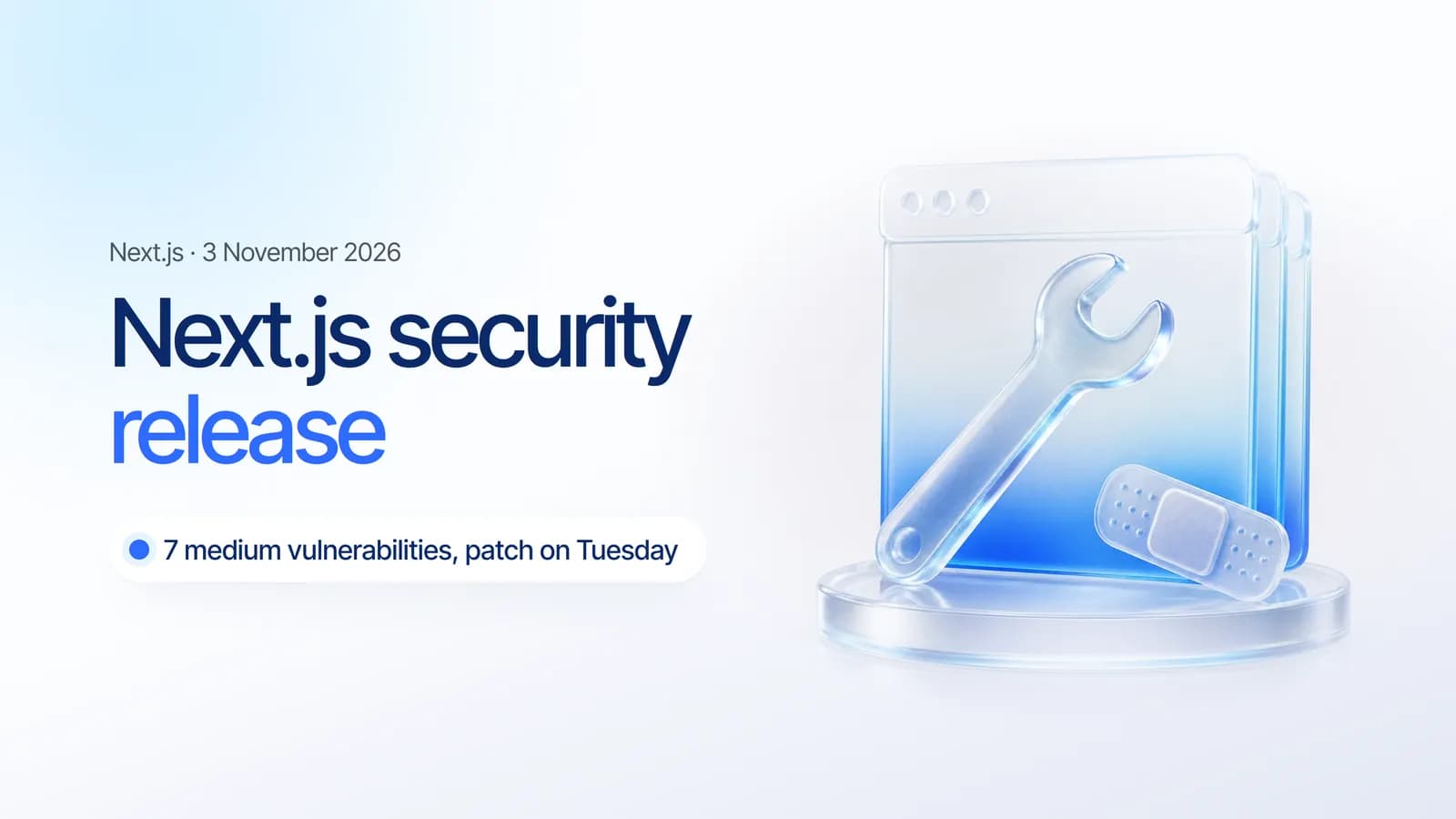
The Next.js security release is scheduled for Tuesday, 3 November 2026. The Next.js team announced on 27 October that it will fix seven medium severity vulnerabilities, and that the full advisories will only be published together with the patch. If your website or web app runs on Next.js, the useful work happens before Tuesday: knowing your version and having a way to test and ship the update the same day.
This article sums up what was announced, which Next.js versions still receive security patches, and the steps we use to prepare client projects for a scheduled release like this one.
What the Next.js team announced
According to the advance notice on the Next.js blog:
- Release date: Tuesday, 3 November 2026, announced in advance so teams can plan upgrades.
- Scope: seven medium severity vulnerabilities in Next.js.
- Details at release time: impact, affected versions and upgrade instructions will be published alongside the release.
- Official advice: upgrade to a patched version once it is available.
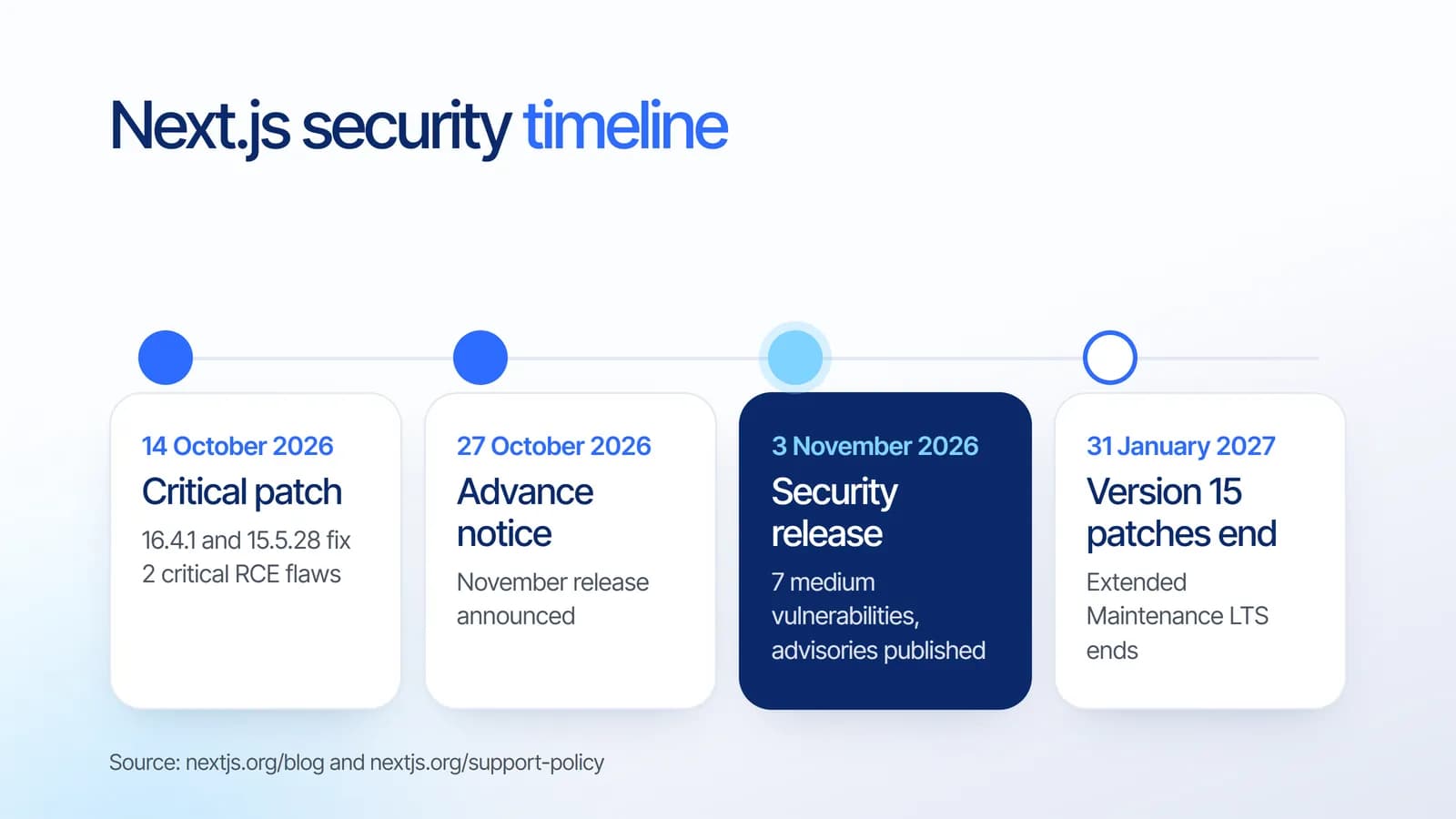
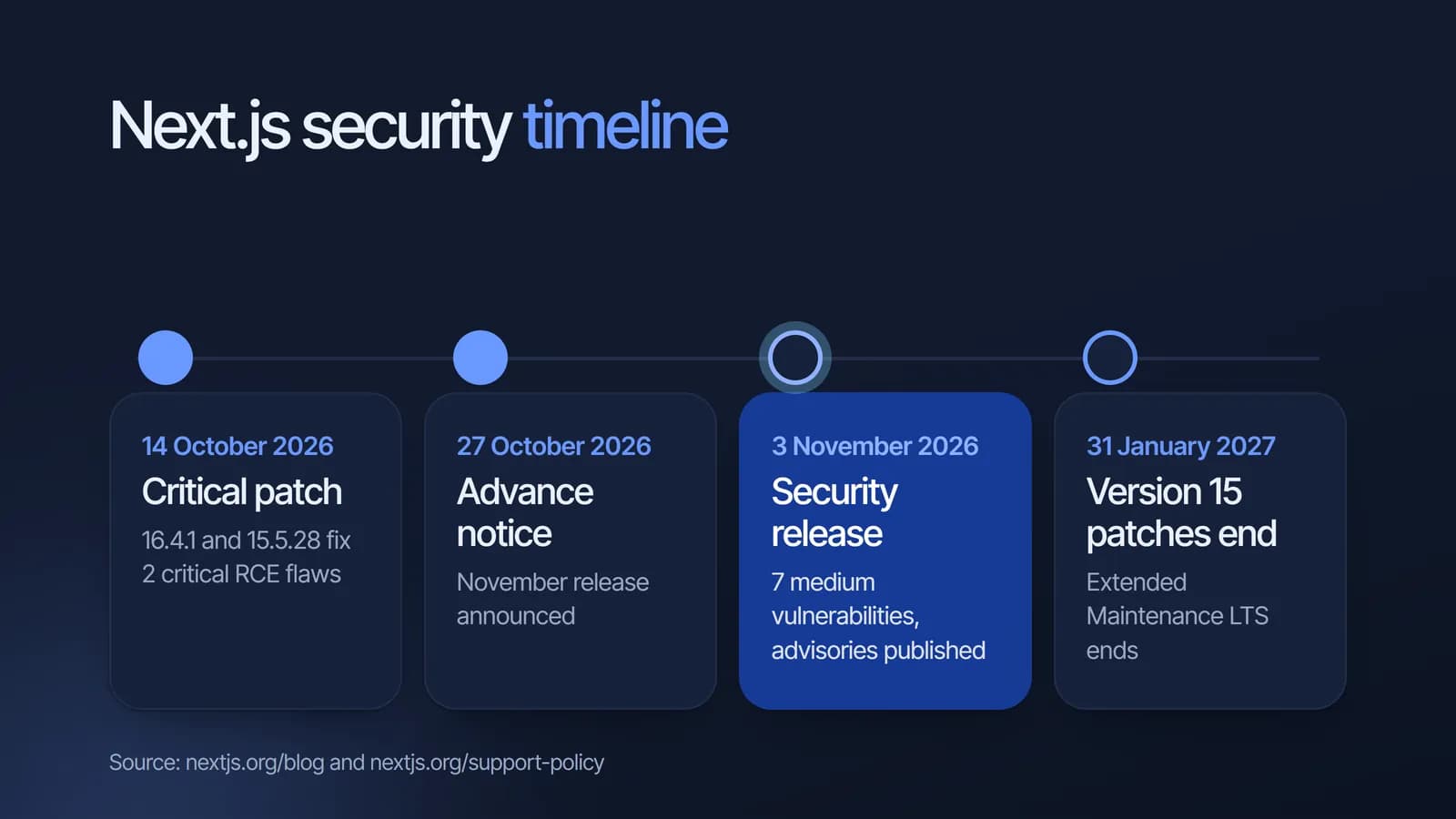
It is the second security release in three weeks. On 14 October, Next.js published versions 16.4.1 and 15.5.28 to fix two critical unauthenticated remote code execution flaws and one high severity denial of service issue. If your app is still below those versions, it is missing the October fixes as well.
Which Next.js versions get the patch
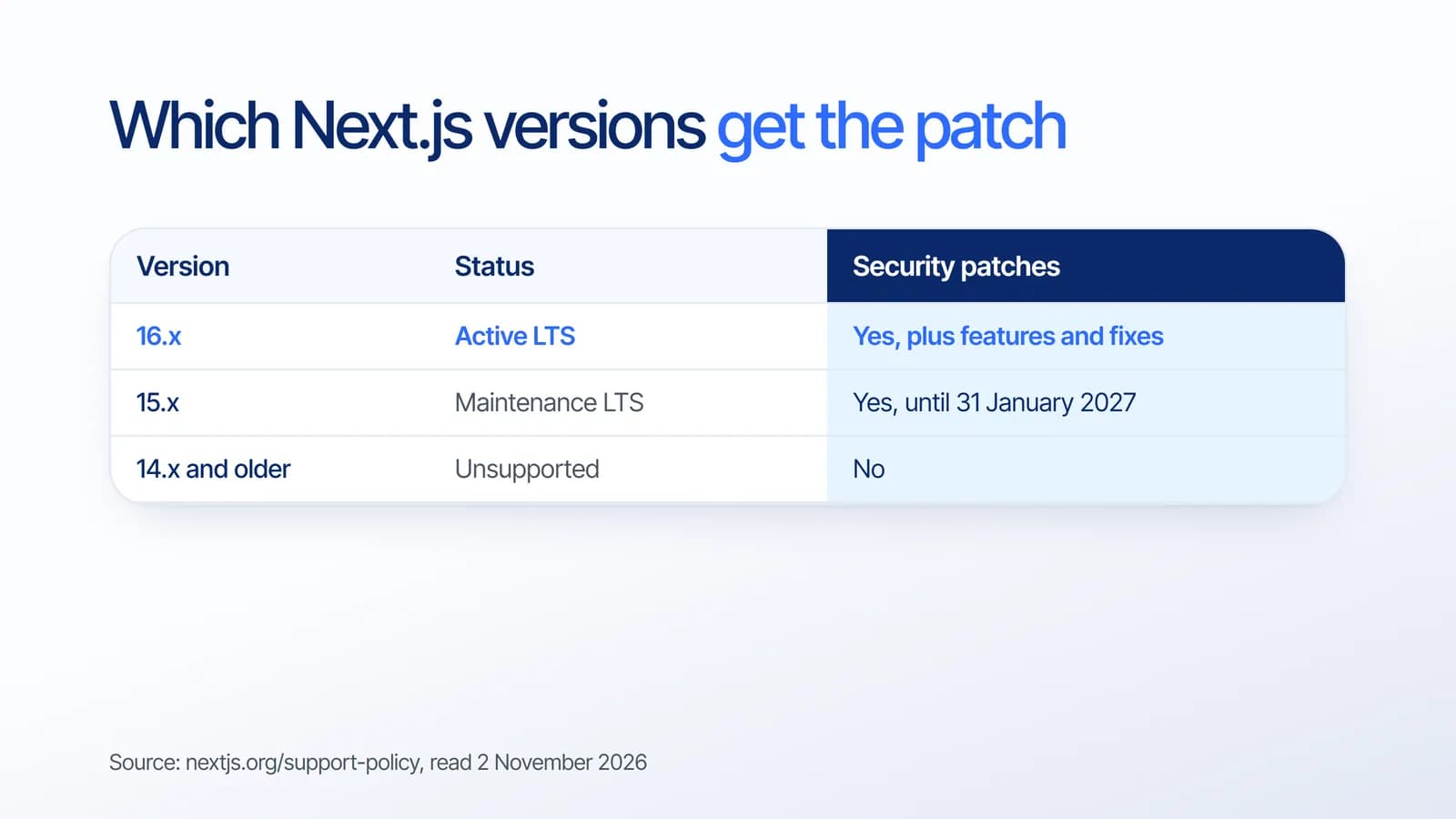
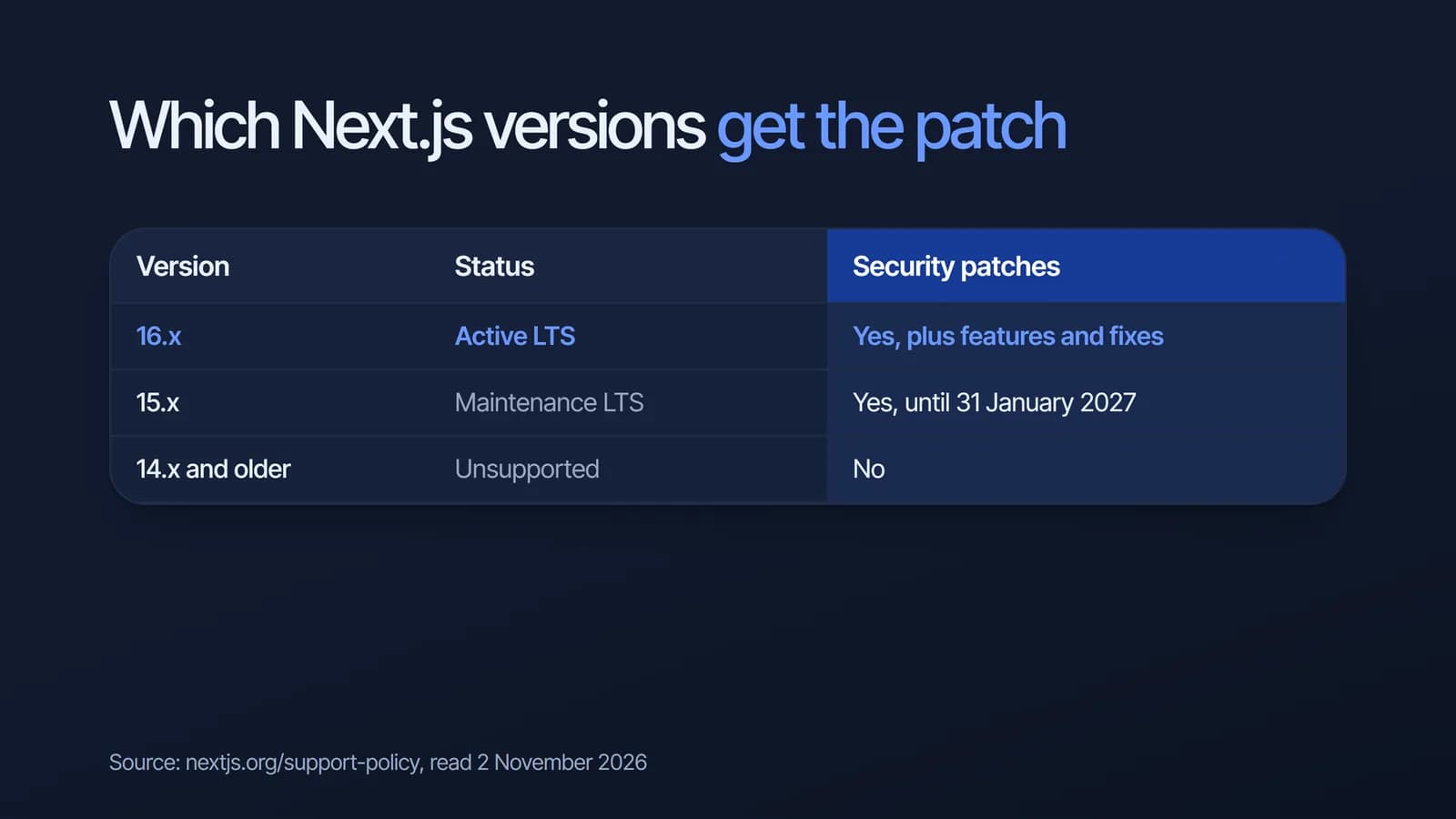
The Next.js support policy lists two supported major versions. Version 16 is in Active LTS and receives features, bug fixes and security patches. Version 15 is in Maintenance LTS, which means only critical fixes and essential security updates. Its original end date was 21 October 2026, but Next.js extended security releases for version 15 through 31 January 2027.
Next.js 14 and older are unsupported. The policy says older versions may be patched only in rare cases, depending on severity, so an app on version 14 should not count on receiving the 3 November fixes.
Why a medium severity patch still matters
Medium does not mean optional. Once advisories are public, the details of each vulnerability are public too, and unpatched sites become easier targets. The safest window is the first few days after release, and that window is much easier to hit when the update has been planned in advance.
There is also a cost side. A version that is two or three releases behind turns a small patch into a larger upgrade with more risk, as we explained in our guide on how to update Next.js safely.
How to prepare for the 3 November Next.js security release
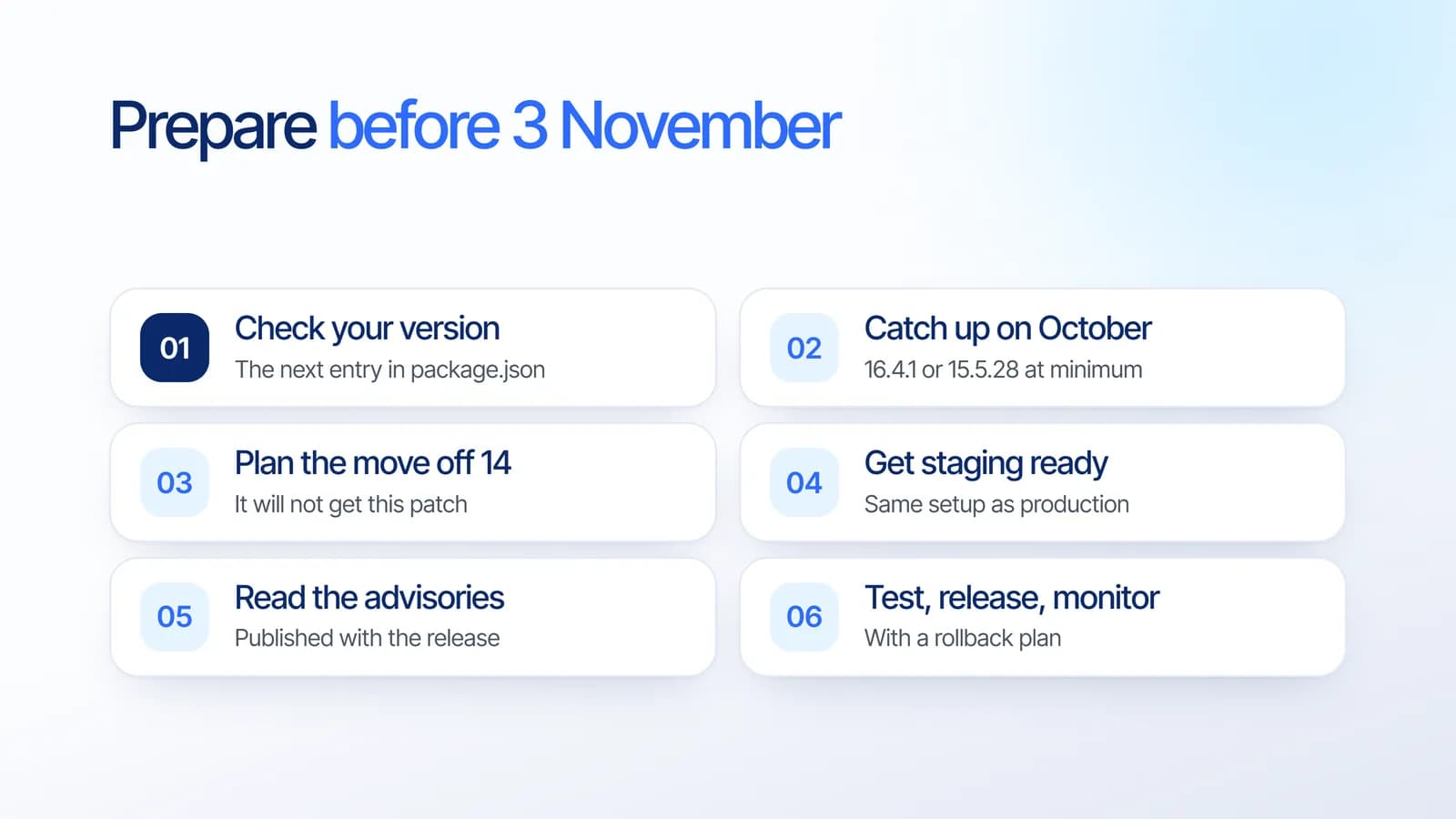
- Check your version. Look at the next entry in package.json for every app you run, including internal tools and landing pages.
- Catch up on October first. Make sure you are on at least 16.4.1 or 15.5.28 so the November patch is a small step.
- Plan the move off version 14. It will not receive this release. Schedule the upgrade to 16, or at least 15 before 31 January 2027.
- Get staging ready. Use the same Node.js version, environment variables and build settings as production.
- Read the advisories on 3 November. Check which of the seven vulnerabilities affect the features you use.
- Test, release and monitor. Run your tests and a quick manual check of key flows, release with a rollback plan, then watch error logs. Our guide to securing your CI/CD pipeline covers the release side.
These steps are our recommendations from client projects, not part of the Next.js announcement.
What it means for your business
Security releases for popular frameworks now arrive on a regular rhythm: a scheduled release in September, an out of band one in October, and another scheduled one in November. A website is not finished when it launches. It needs someone who watches these announcements, applies patches and keeps the framework on a supported version.
For businesses that rely on a Next.js site for sales or bookings, that maintenance is cheaper than an incident. We covered the previous cycle in our article on the September Next.js security release.
How Estontinc helps
Estontinc is a software house in Malang, Indonesia, with 100+ projects and 50+ clients over more than six years. For Next.js websites and apps we can:
- Check your version and apply the patch, tested on staging before production.
- Upgrade older apps from Next.js 14 or 15 to 16 through our web development service.
- Set up CI/CD, monitoring and rollback with our cloud and DevOps team.
- Maintain your site after launch with updates, monitoring and bug fixes.
We work under NDA, you own the source code, and we communicate in English, Indonesian or Japanese. Want us to check your Next.js version before Tuesday? Send your site through the contact page and we will reply within 24 hours.
Frequently asked questions
When is the Next.js November 2026 security release?
It is scheduled for Tuesday, 3 November 2026. The Next.js team announced it on 27 October 2026 so teams can plan upgrades. The release fixes seven medium severity vulnerabilities, and the full advisories with affected versions and upgrade instructions are published at the same time.
Which Next.js versions receive security patches?
Next.js 16 is in Active LTS and Next.js 15 is in Maintenance LTS. Security releases for version 15 were extended until 31 January 2027. Next.js 14 and older are unsupported and are only patched in rare cases, so apps on those versions should upgrade.
Is Next.js 14 still supported?
No. The Next.js support policy lists version 14 and older as unsupported. They do not receive regular security releases, so a site on Next.js 14 should not rely on the 3 November patch. Plan an upgrade to version 16, or to version 15 before its patches end on 31 January 2027.
How do I update Next.js safely?
Check the current version in package.json, catch up on earlier patches such as 16.4.1 or 15.5.28, then install the patched version on a staging environment that matches production. Run your tests, check key pages and flows manually, release with a rollback plan, and monitor errors after deploying.
Sources
Facts and figures in this article come from these official sources.
- Web development
- Next.js
- Security
- Maintenance