EstontincPublished 3 min read
Android developer verification 2026: what app owners in Indonesia must do now
Indonesia is one of the first four countries where Android apps must come from verified developers. What changes, which stores are included and what to check.
Android developer verification starts on 30 September 2026, and Indonesia is one of the first four countries where it applies, together with Brazil, Singapore and Thailand. From that date, apps installed from participating app stores on certified Android devices must be registered to a developer whose identity has been verified.
If your business has an Android app, most of the work may already be done for you, but not always. Here is what changes, based on Google’s official Android Developers documentation, and what we recommend you check today.
What is Android developer verification?
Google describes it as a program that verifies developers’ identities to protect users from malware and scams. The idea is simple: when every app is tied to a verified developer, bad actors find it much harder to spread harmful apps again and again under new names.
Timeline: from August 2026 to a global rollout in 2027
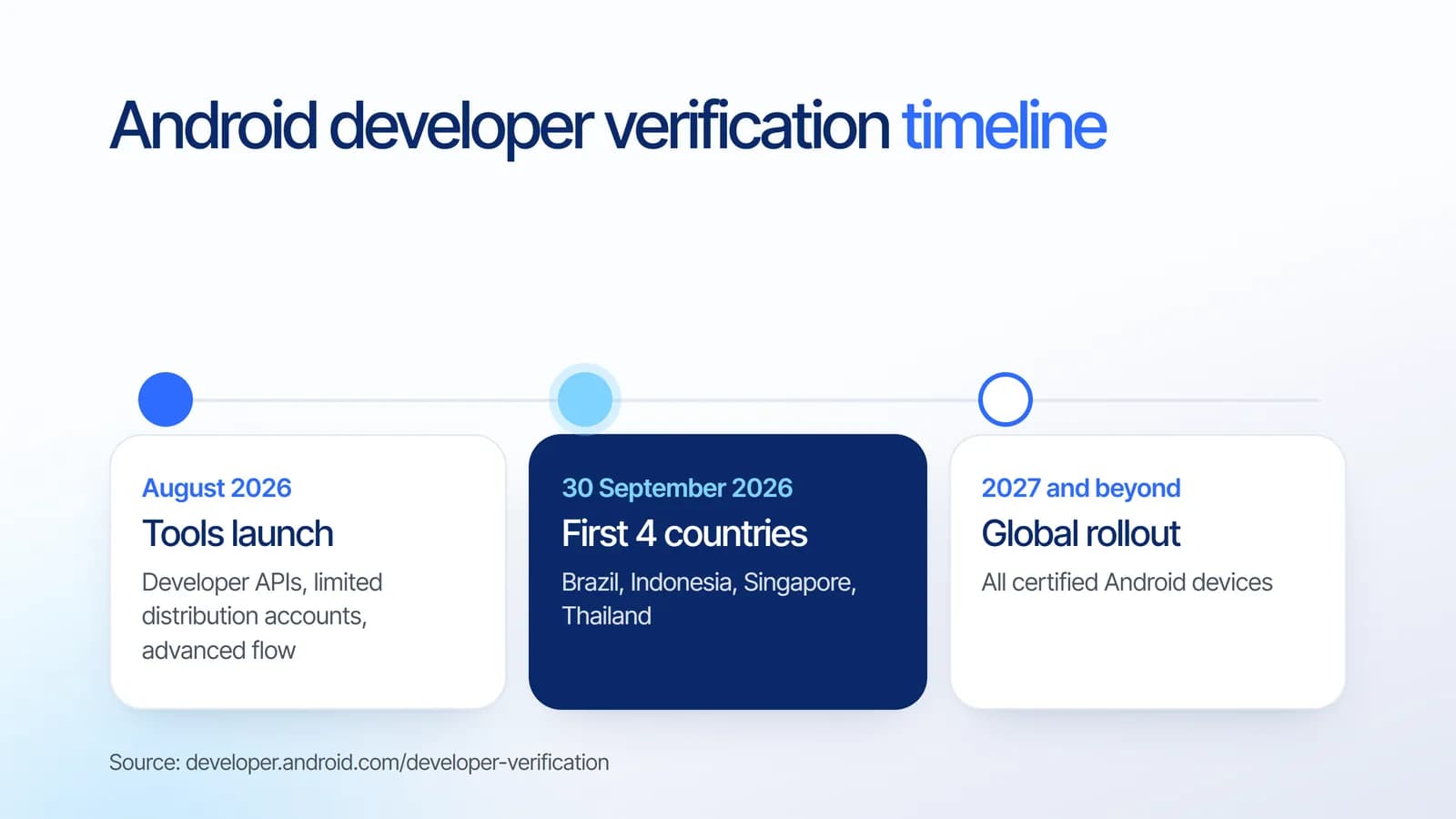
- August 2026: developer APIs, limited distribution accounts and an advanced flow for power users launched.
- 30 September 2026: regional deadline in Brazil, Indonesia, Singapore and Thailand for participating app stores.
- 2027 and beyond: global rollout for all certified Android devices.
Which stores and devices are included?
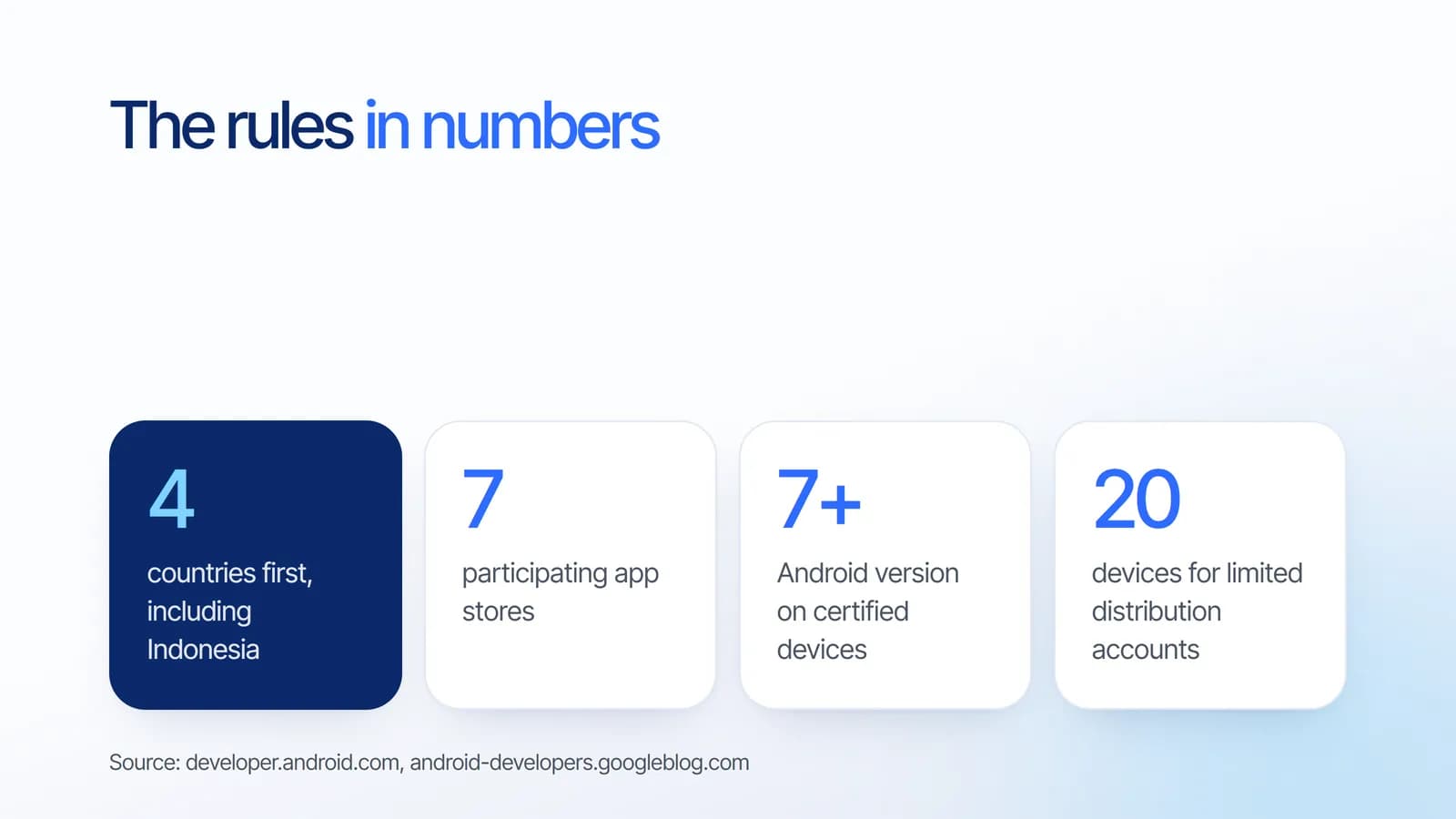
The protections begin for users installing apps from seven participating stores: Google Play, HONOR App Market, OPPO App Market, Galaxy Store, Palm Store, V-Appstore and GetApps, on certified devices running Android 7 or later. Apps that are not registered can still be installed with Android Debug Bridge (adb) or through the advanced flow, so power users keep that option.
What it means for Google Play apps
According to Google, most Play developers are already verified and over 99% of their apps have been registered automatically. Google still asks Play developers to check the Play Console Home page and register any remaining apps by 30 September 2026, to avoid global removal from Google Play. Students, teachers and hobbyists can use a limited distribution account to share apps with up to 20 devices without a government-issued ID or registration fee.
What app owners should check now
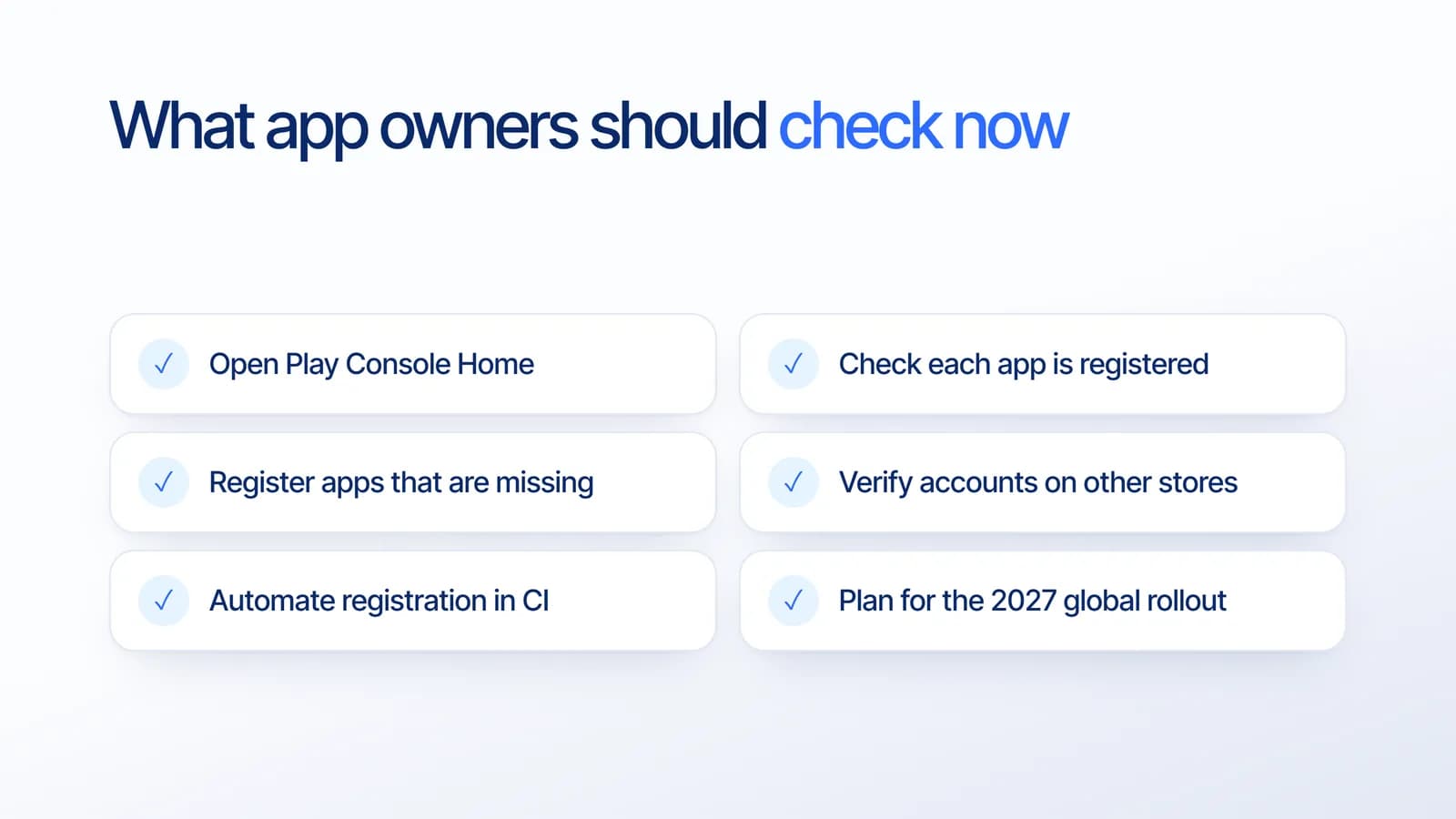
- Open the Play Console Home page and look at the verification status of every app.
- Register any app that was not registered automatically, especially older apps or apps under a separate account.
- Check your other stores. If your app is also on Galaxy Store, OPPO App Market or another participating store, make sure verification is complete there too.
- Automate it. Google launched APIs to register apps in bulk or from your continuous integration pipeline, which helps teams that ship many apps or builds.
- Plan for 2027. The requirement will expand globally, so apps distributed outside these stores should prepare early.
What it means for your business
For most businesses, this is a quick check rather than a big project. The risk is in the details: an app registered under a former developer’s personal account, a store listing nobody has opened in years, or a build pipeline that nobody documented. These are exactly the cases where apps quietly become harder to install.
It is also a good reminder that an app is never finished. Store rules, Android versions and security requirements change every year. If you are planning a new app, our guide to app development cost explains why maintenance belongs in the budget from day one.
How Estontinc can help
We can review your developer accounts and app registrations, fix what is missing, and keep your app up to date with our maintenance plans. Our mobile app development team handles store submissions, and our cloud & DevOps service can automate registration and releases in your pipeline.
Not sure your app is ready? Ask us to check it. We reply within 24 hours.
Frequently asked questions
When does Android developer verification start in Indonesia?
It starts on 30 September 2026. From that date, apps installed from participating app stores on certified Android devices in Indonesia, Brazil, Singapore and Thailand must be registered to a verified developer. Google plans to expand the requirement globally in 2027.
Which app stores are part of Android developer verification?
The first phase covers seven stores: Google Play, HONOR App Market, OPPO App Market, Galaxy Store, Palm Store, V-Appstore and GetApps. It applies to certified devices running Android 7 or later.
Do I need to do anything if my app is on Google Play?
Google says over 99% of Play apps were registered automatically, but you should still open the Play Console Home page, check the status of each app and register any that are missing by 30 September 2026 to avoid removal from Google Play.
Can users still install unregistered Android apps?
Yes, but not through the participating stores. Google says unregistered apps can still be sideloaded with Android Debug Bridge (adb) or through an advanced flow meant for power users. For a business app, relying on sideloading is not practical, so registering your app is the safer path.
Sources
Facts and figures in this article come from these official sources.
- Android
- Mobile apps
- Google Play
- App security