
EstontincPublished 3 min read
How to speed up TypeScript builds, and what tsrs means for your team
TypeScript keeps getting faster, from the Go port to tsrs in Rust. What the new numbers mean, why Rust matters for WebAssembly, and how to speed up your builds now.

How do you speed up TypeScript builds? Type checking is time developers spend waiting, locally and in CI. On 20 October 2026, Cloudflare announced tsrs, a Rust port of the TypeScript compiler built with VoidZero in close collaboration with the TypeScript team. Early benchmarks show it is up to 8x faster and uses about 70% less memory than TypeScript 7.0.
This article explains what tsrs is, why it matters, and what you can do today to make TypeScript builds faster without waiting for experimental tools.
TypeScript keeps getting faster
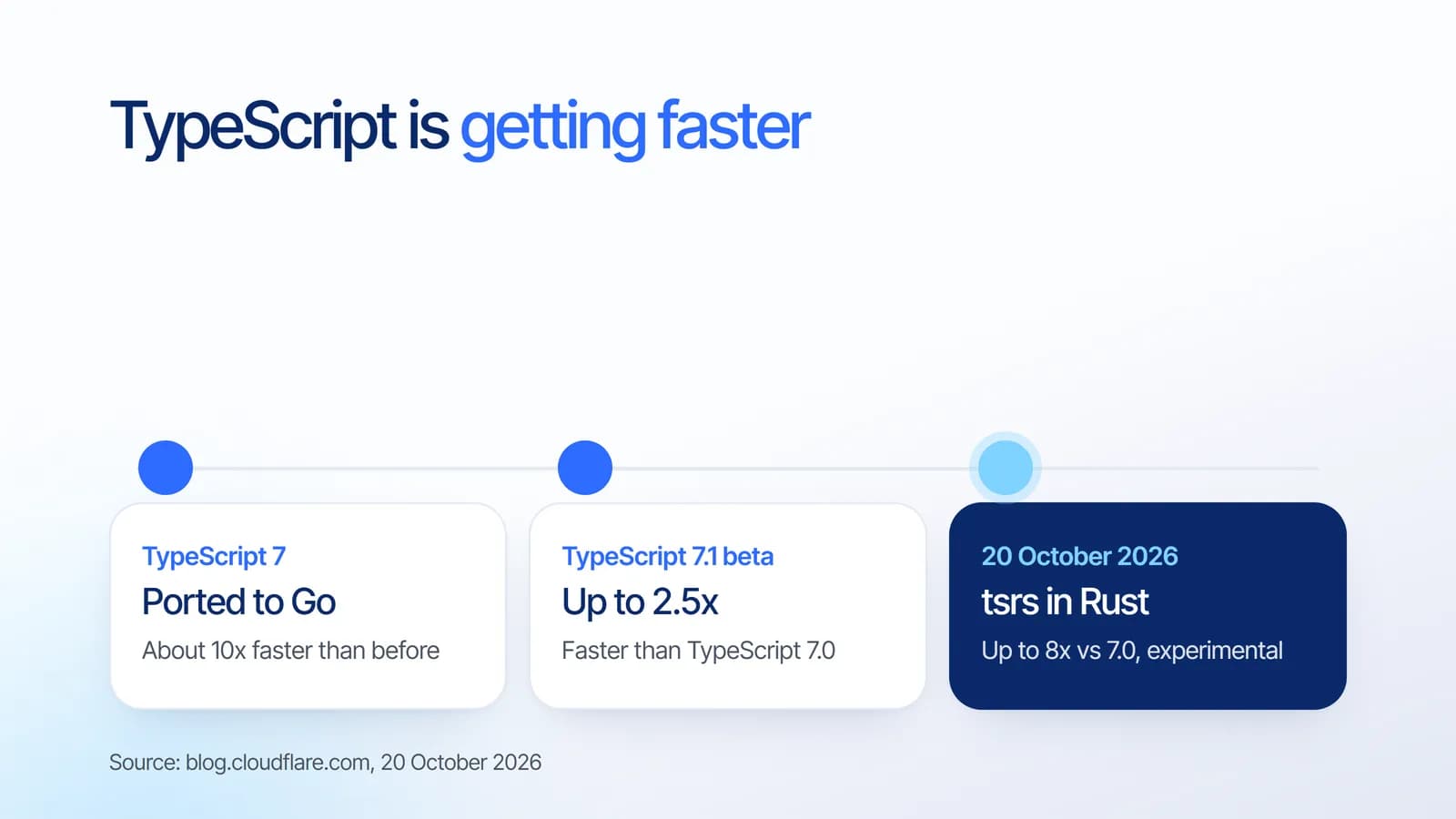
- TypeScript 7 (Go port): according to Cloudflare, the TypeScript team's Go port already made TypeScript about 10x faster and far more memory efficient than the previous version written in TypeScript.
- TypeScript 7.1 beta: up to 2.5x faster than TypeScript 7.0, and some of those optimisations came from tsrs.
- tsrs: up to 8x faster and about 70% less memory than TypeScript 7.0 with the same number of type-check workers, in benchmarks set up with the TypeScript team.
What tsrs is, and what it is not
- Not a fork. Cloudflare says the TypeScript team should remain in full control of the language's design and direction, and tsrs follows those decisions closely.
- Experimental. There are still differences from upstream TypeScript, such as the order diagnostics are printed, which the team aims to minimise before a stable release.
- Part of Oxc. tsrs is being incubated in the Oxc JavaScript toolchain, alongside tools such as Oxlint, and will be merged with tsc-rs to support features like the Language Server Protocol.
Why Rust matters: WebAssembly and AI agents
Speed is only part of the story. Rust compiles to WebAssembly without shipping a garbage collector, which keeps memory use small. That makes it possible to run complete development toolchains in a browser, on embedded devices, or inside sandboxes where AI agents build and test code safely. Cloudflare says this is one reason a Rust port is useful even after the Go port's big gains.
How to speed up TypeScript builds today
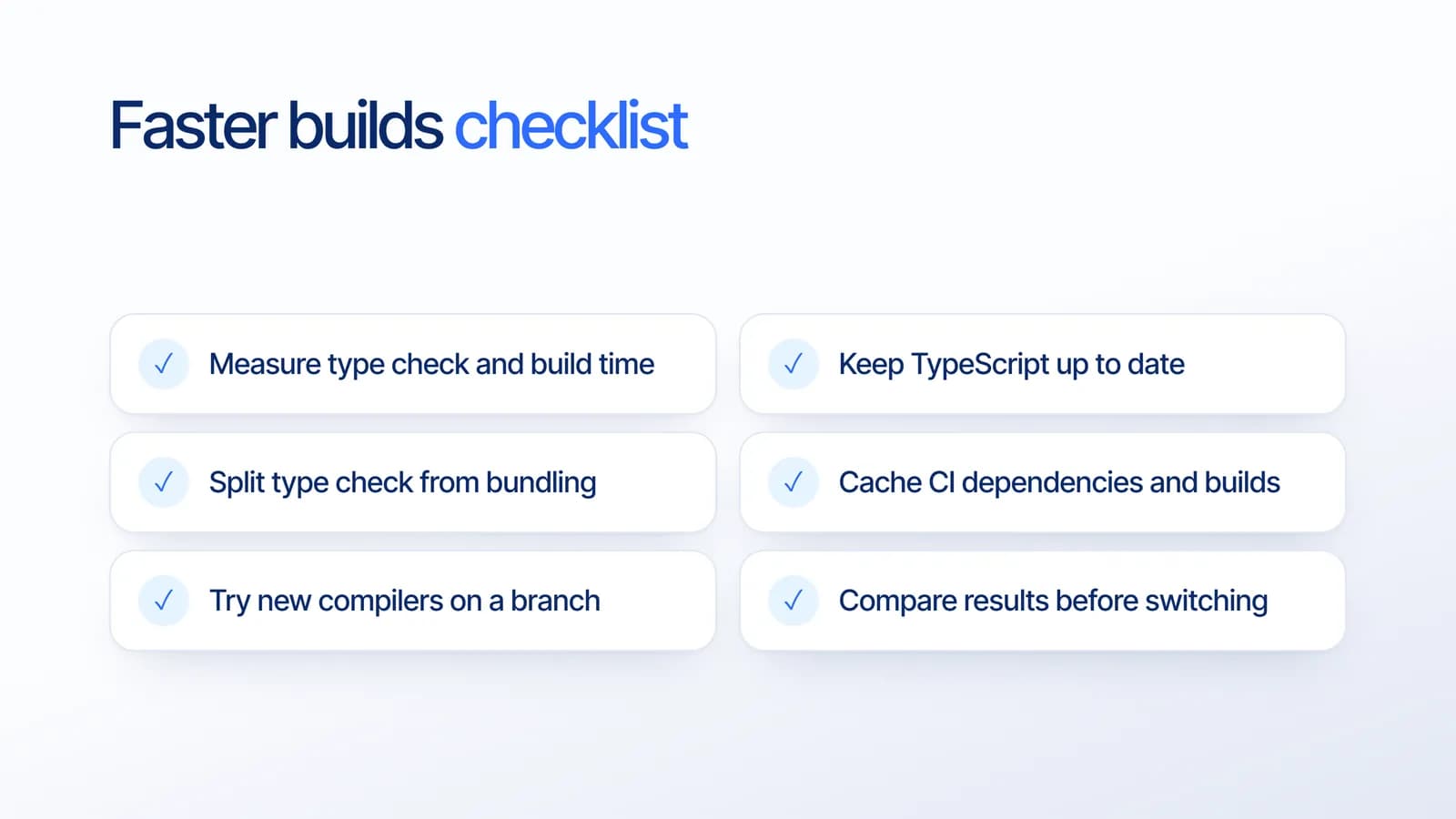
Based on our project experience, these steps help most teams without waiting for tsrs to become stable:
- Measure first. Time type checking and bundling separately, locally and in CI.
- Keep TypeScript up to date. Each release brings performance work, as the 7.1 beta shows.
- Split type checking from bundling so a fast bundler is not waiting on the type checker, and run them in parallel in CI.
- Cache dependencies and build outputs in your CI pipeline.
- Try new compilers on a branch, with your real project, before changing anything in production pipelines.
- Compare results, including diagnostics, so a faster tool does not hide errors.
Pipeline speed and safety go together. Our article on securing your CI/CD pipeline covers how to change build tools without introducing risk, and why is my app slow covers runtime performance.
What it means for your business
Faster type checks shorten the feedback loop for every developer on every change. Over a year, minutes saved per build add up to real delivery time. The safe approach is to measure, adopt stable improvements now, and trial experimental tools like tsrs on a branch first.
How Estontinc helps
Estontinc is a software house in Malang with 100+ projects and 50+ clients over more than six years. Through our web development service we build and maintain TypeScript applications, and our cloud and DevOps team audits build pipelines and upgrades toolchains safely.
Do your builds feel slow? Tell us about your project through the contact page, and we will reply within 24 hours.
Frequently asked questions
What is tsrs?
tsrs is a Rust port of the TypeScript compiler, announced by Cloudflare on 20 October 2026 and built with VoidZero in collaboration with the TypeScript team. It is incubated in the Oxc toolchain and is currently available as an experimental release.
How much faster is tsrs than TypeScript?
In early benchmarks set up with the TypeScript team, tsrs was up to 8x faster and used about 70% less memory than TypeScript 7.0 with the same number of type-check workers. TypeScript 7.1 beta is itself up to 2.5x faster than 7.0.
Is tsrs a fork of TypeScript?
No. Cloudflare says the TypeScript team should remain in full control of the language's design and direction. tsrs aims to be a faithful port, and performance improvements it finds are offered back to the TypeScript codebase so every user benefits.
How can I speed up TypeScript builds now?
Measure type checking and bundling separately, keep TypeScript up to date, split type checking from bundling, cache dependencies and builds in CI, and trial new compilers on a branch with your real project before switching. Compare diagnostics so faster tools do not hide errors.
Sources
Facts and figures in this article come from these official sources.
- Web development
- TypeScript
- Cloudflare
- Developer tools