
EstontincPublished 3 min read
Is your online store ready for AI agents? WebMCP and MCP explained
AI agents struggle to shop on sites built for humans. How WebMCP gives them real tools, what Commerce.com and Cloudflare rolled out, and a checklist for an agent-ready store.

Is your online store ready for AI agents? As Cloudflare puts it, AI can write code and pass the bar exam, but it still struggles to buy a pair of shoes online. Websites were built for humans, not agents. On 21 October 2026, Cloudflare described how almost 100,000 Commerce.com domains now give AI agents real shopping tools through WebMCP.
This article explains why agents struggle with ordinary stores, what WebMCP changes, and how to prepare your own store.
Why AI agents struggle to shop
Most shopping agents today work from a site's HTML. They look at the page, guess which button does what, click, and try again when they get it wrong. According to Cloudflare, this is slow, uses a lot of tokens, and something as small as a theme change can break it. Cookie banners, variant drop-downs and bot challenges add more friction.
What WebMCP changes
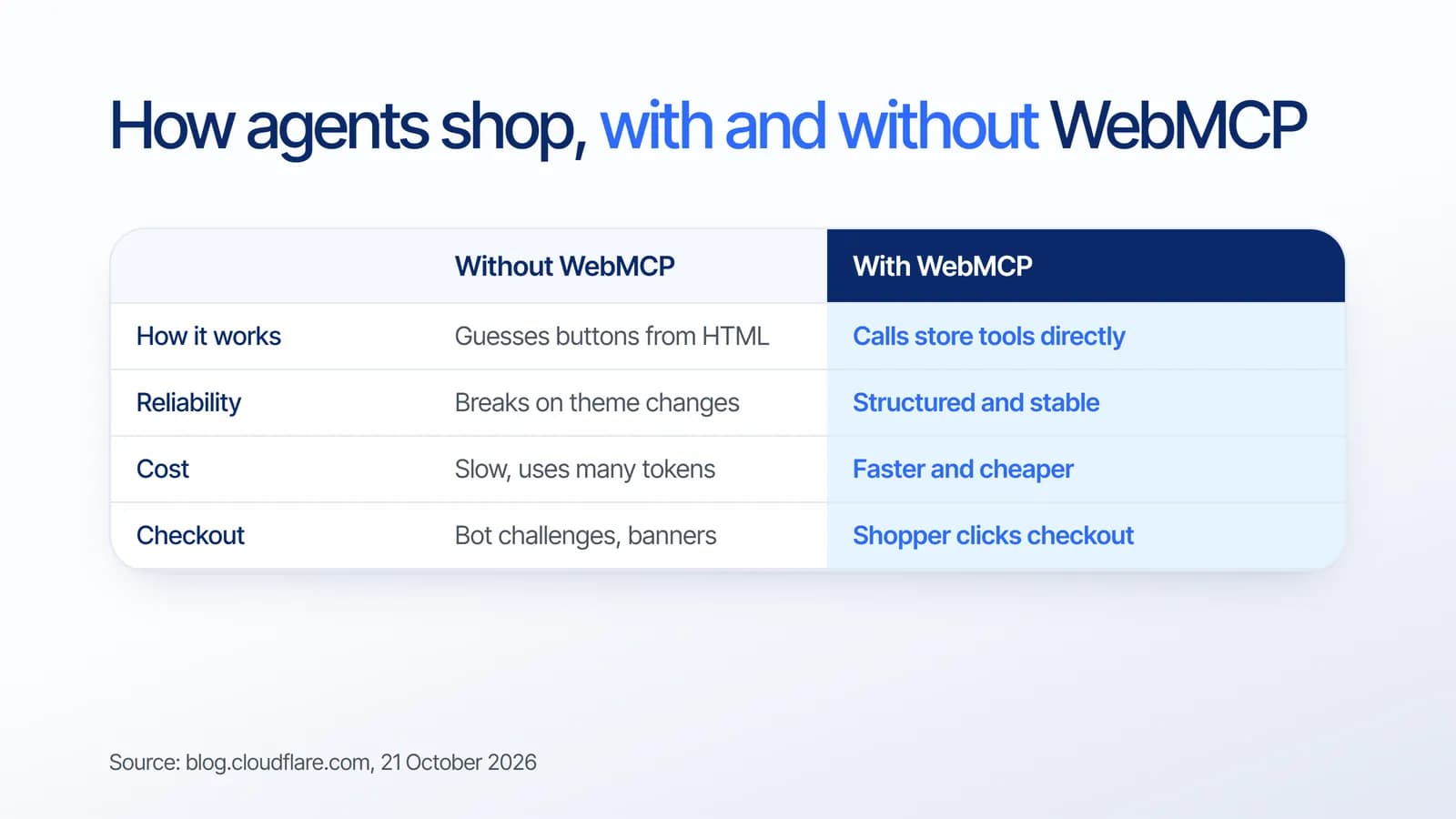
- Structured tools on the page. WebMCP is a browser standard from Google that gives agents tools such as search_products. Instead of hunting for buttons, the agent calls the exact tool it needs.
- Shopper stays in control. Tools run inside the shopper's active browser session on the store's domain, so the agent sees the same prices and cart, no credentials go to a third party, and the shopper clicks checkout themselves.
- No code changes for merchants. Cloudflare injects a small script at the edge. Commerce.com turned it on platform-wide, with an opt-out for each merchant that adds no latency and no script when used.
- Works with server-side MCP. Commerce.com uses the same shopping tools for agents in the browser and for agents that connect to a store directly.
WebMCP is still an experimental proposed standard in early preview, available behind experimental Chrome flags, in Chrome Origin Trials and in some agentic browsers. It is a signal of where shopping is heading rather than something every customer uses today.
Checklist: an agent-ready store
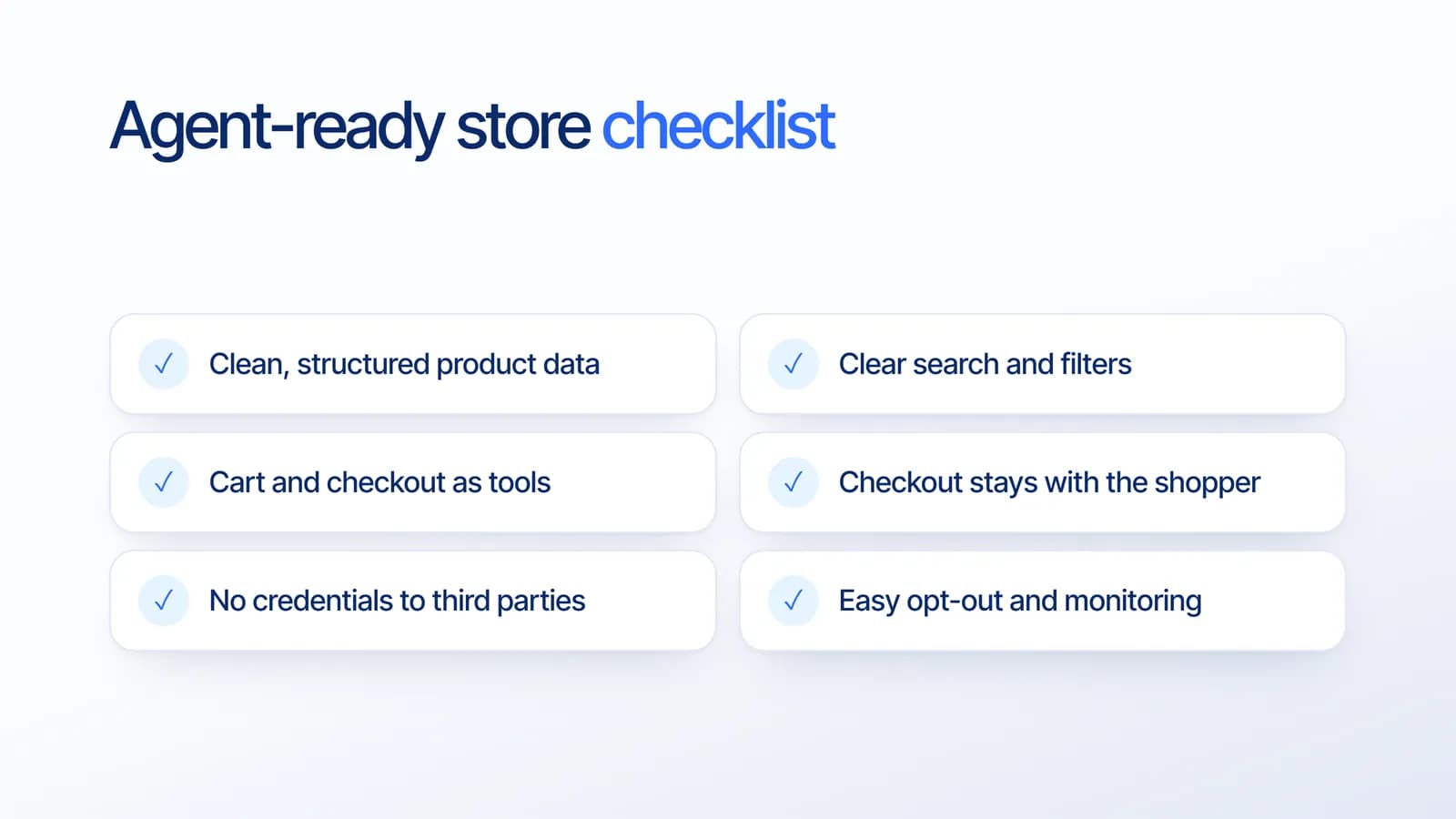
Based on Cloudflare's write-up and our own project experience, these are the foundations to put in place:
- Clean, structured product data with clear names, variants, prices and stock.
- Clear search and filters, so both people and agents can narrow results reliably.
- Cart and checkout exposed as tools, for example through an MCP server.
- Checkout that stays with the shopper, so payment and the customer relationship remain on your site.
- No credentials sent to third parties, and tools that run with the shopper's own session.
- Easy opt-out and monitoring, so you can see how agents use your store and switch features off if needed.
Running agent tools also means managing AI costs and security. See our guides on reducing AI costs and protecting API keys.
What it means for your business
Online stores now have two audiences: people, and the agents acting for them. A store that agents can read and use reliably is more likely to appear in their answers, while checkout and the customer relationship stay with the merchant. Preparing structured data and clear tools now costs little and keeps your options open.
How Estontinc helps
Estontinc is a software house in Malang with 100+ projects and 50+ clients over more than six years. Through our web development service we build e-commerce platforms with clean product data, and our AI development team builds MCP servers and agent integrations that keep checkout under your control.
Want your store ready for agentic shopping? Tell us about your platform through the contact page, and we will reply within 24 hours.
Frequently asked questions
What is WebMCP?
WebMCP is an experimental proposed browser standard from Google that lets a website expose structured tools to AI agents, such as searching products or adding items to a cart. Agents call these tools directly instead of guessing which buttons to click on the page.
How did Commerce.com use WebMCP?
According to Cloudflare's blog post, Commerce.com enabled WebMCP across almost 100,000 storefront domains using Cloudflare's edge implementation, without merchants editing their themes. Each merchant can opt out, and opted-out stores get no injected script, no remote lookups and no extra latency.
Is shopping through AI agents safe for customers?
In Commerce.com's setup, WebMCP tools run in the shopper's own browser session on the store's domain, no credentials go to a third party, and the shopper clicks checkout themselves. That keeps payment details and the final purchase decision with the customer.
How can I make my online store ready for AI agents?
Start with clean, structured product data and reliable search, then expose search, cart and checkout as tools, for example through an MCP server. Keep checkout and payment on your site, avoid sharing credentials with third parties, and monitor how agents use your store.
Sources
Facts and figures in this article come from these official sources.
- AI
- E-commerce
- WebMCP
- Web development